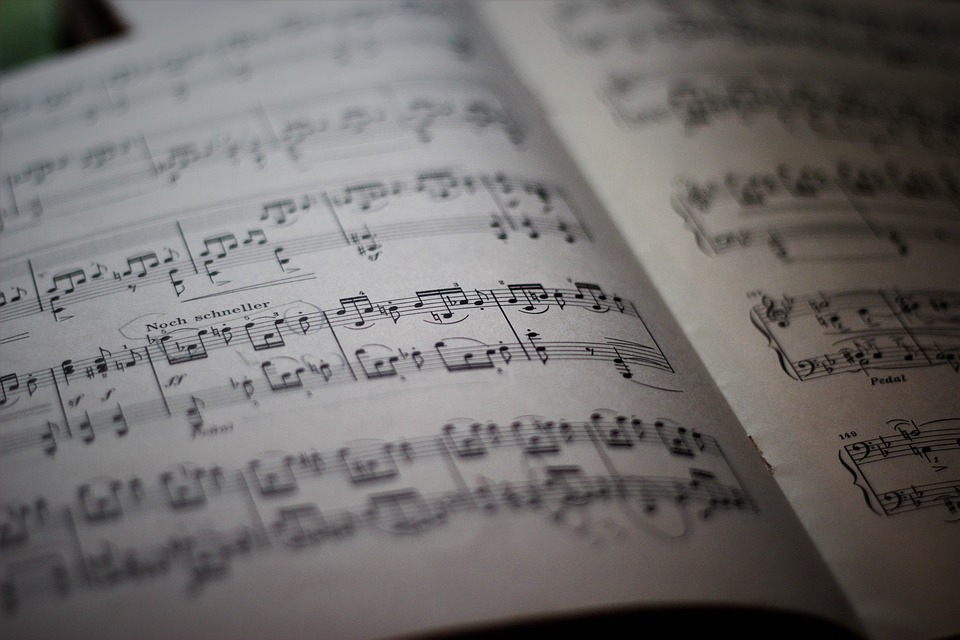


I got tongue-tied recently, explaining what I liked about an author’s style at my monthly book club.
“It just….sounds right,” I said, to a room full of knowing nods.
Anyone who reads will tell you that words have a melody and good books nail that rhythm.
So I wasn’t surprised to read recently that we use the parts of our brains associated with hearing even when reading silently to ourselves.
You are literally hearing the words in your head.
As a journalist/writer, I’ve one hard-and-fast rule: always read your first draft aloud.
It’s something I’d urge every writer to do.
Listening to the piece is invaluable for catching the rhythm, cadence and flow of the language.
Anything that sounds stilted or forced is immediately apparent and gives you a good idea of where to start your revisions.

Understanding the power of sound can be a powerful shift in perspective for the writer.
And a powerful way of improving their work.
Poets have known this for years, employing various linguistic devices to convey mood and atmosphere.
A handy example that comes to mind is Wilfred Owen’s disjointed alliteration in Anthem for Doomed Youth to evoke the noise of the artillery blast:
Only the stuttering rifles’ rapid rattle
Fast, sharp and staccato, you don’t just picture the gun fire, you hear it.
But you don’t have to be a poet to use the power of sound. It’s important in every type of writing from blog posts to works of fiction.
To harnass some of that rhythmic power in your own prose, I highly suggest reading more poetry.
A great way to start is by signing up to the Poetry Foundation’s newsletter (full disclosure, I’m a member and love it). They send you a random poem every day so it’s a great way to expose yourself to different writers and styles.
I’d also recommend paying attention to grammar. It’s not the most glamorous of topics but rhythm is defined by punctuation and sentence structure.
Learn the rules, and then play with them.
Vary sentence length and structure, play with language, speech patterns and slang.
Above all, find your own pace.
Because there’s no better rhythm than your own voice.
 Catherine Morris
An important topic for sure! This is why it is such a great idea to read your work out loud during the editing process
LikeLike
Reblogged this on msamba.
LikeLike